Choosing the right tire size for your vehicle is essential for safety, performance, and fuel efficiency. Whether you’re upgrading your tires or replacing old ones, understanding tire sizes ensures you make an informed decision. In this article, we’ll break down how tire sizes work and provide a tabulated summary for easy reference.
What Does a Tire Size Mean?
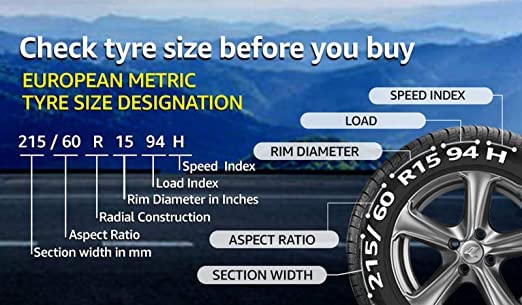
Tire size is represented as a code found on the sidewall of a tire, such as 205/55R16 91V. Each component of this code conveys critical information about the tire’s specifications:
- Tire Width (205)
- Measured in millimeters, this indicates the width of the tire from sidewall to sidewall.
- Aspect Ratio (55)
- Expressed as a percentage, it represents the height of the tire’s sidewall relative to its width. For example, an aspect ratio of 55 means the sidewall height is 55% of the tire’s width.
- Construction (R)
- The letter “R” indicates radial construction, the most common type for modern vehicles.
- Wheel Diameter (16)
- Measured in inches, this specifies the diameter of the wheel the tire is designed to fit.
- Load Index (91)
- This numerical code represents the maximum weight the tire can support when properly inflated.
- Speed Rating (V)
- The speed rating denotes the maximum speed the tire can handle safely.
Example: P215/65 R15 95H
| P | Tire class |
| 215 | Tire width in millimeters; indicates how much of your wheel is in contact with the road. |
| 65 | Aspect ratio |
| R | Tire construction |
| 15 | Wheel diameter size; indicates what size rim you will need |
| 95 | Load index |
| H | Speed rating |
Why Tire Size Matters
1. Safety
Using the wrong tire size can compromise braking, handling, and overall stability.
2. Performance
Properly sized tires enhance your vehicle’s grip, cornering, and fuel efficiency.
3. Vehicle Compatibility
Incorrect tire sizes can interfere with suspension systems, speedometer readings, and traction control.
4. Comfort
Tire size affects ride quality and noise levels, especially on uneven terrain.
Common Tire Sizes and Their Applications
Below is a tabulated summary of popular tire sizes, their typical applications, and key specifications:
| Tire Size | Vehicle Type | Typical Use | Key Features |
|---|---|---|---|
| 195/65R15 | Compact sedans | City and highway driving | Balanced performance and fuel efficiency |
| 205/55R16 | Mid-sized sedans | Urban and suburban use | Improved grip and handling |
| 225/60R17 | SUVs and crossovers | Long-distance and off-road | Comfort and stability |
| 265/70R16 | Trucks and off-road SUVs | Heavy-duty and rugged terrain | Enhanced durability |
| 275/40R20 | Sports cars | High-performance driving | Superior cornering and speed stability |
How to Choose the Right Tire Size
1. Check Your Vehicle’s Manual
- The manufacturer specifies recommended tire sizes for optimal performance.
2. Inspect the Sidewall
- Look at the existing tires for the size code, ensuring compatibility.
3. Consider Driving Conditions
- For snowy or muddy terrains, larger tires with a higher aspect ratio might be suitable.
4. Consult a Professional
- A tire expert can recommend sizes based on your vehicle and driving habits.
Frequently Asked Questions (FAQs)
1. Can I use a tire with a different size than recommended?
It is not advisable unless the alternative size is approved by the manufacturer, as it can affect safety and performance.
2. How do I know if a tire will fit my wheel?
Ensure the wheel diameter matches the tire’s specified size (e.g., 16-inch wheels require a 16-inch tire).
3. What happens if I use the wrong tire size?
Using incorrect sizes can lead to uneven wear, poor handling, and potential mechanical issues.